
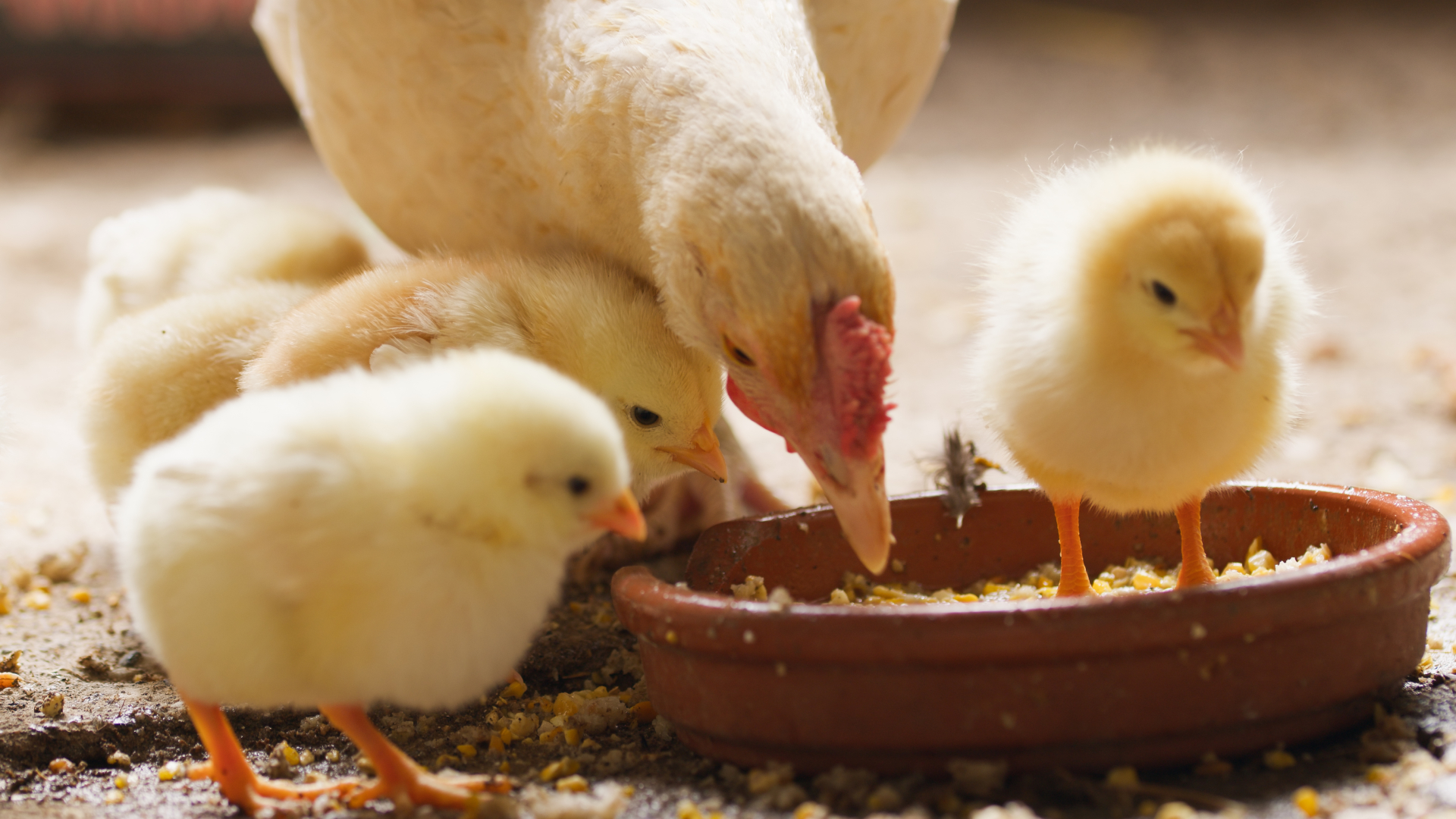
One of the most common mistakes new flock owners make is feeding the same food from hatch to hen. It feels simple, but chickens have different nutritional needs at each stage of life; it’s not a one-size-fits-all process.
Using the wrong chicken feed at the wrong time doesn’t just mean suboptimal performance, it can cause real health problems that are completely avoidable. Here’s what your chickens actually need, and when.
Stage One – Chicks: 0 to 8 Weeks
From the moment they hatch, chicks need a chick starter feed. This is a high-protein crumble, typically between 18 and 22% protein, formulated to support the rapid development happening in those first weeks. Organs, feathers, and immune function are all building simultaneously, so nutrition during this window really matters.
You’ll often see starter feed sold in medicated and unmedicated versions. Medicated chick starter contains amprolium, which helps protect chicks against coccidiosis, a common intestinal disease that can be fatal in young birds.
If your chicks haven’t been vaccinated against coccidiosis, medicated starter is generally the right choice. If they have been vaccinated, stick with unmedicated to avoid counteracting the vaccine.
Fresh water should be available at all times. Use shallow-trough waterers sized for chicks; deep water sources are a drowning risk in the first few weeks.
Stage Two – Pullets: 8 to 18 Weeks
Around 8 weeks, your chicks start looking like actual small chickens, and it’s time to switch to a grower feed. The key difference is calcium. Grower feed has lower calcium content than layer feed, and that matters because young pullets whose reproductive systems aren’t yet mature can suffer kidney damage from excess calcium.
Protein in grower feed typically ranges from 14 to 17%, enough to keep supporting growth without pushing excess calcium through a system that isn’t ready for it.
Stay on grower feed until around 18 weeks, or until you start noticing the first signs of laying: reddening of the comb and wattles, a slight change in behaviour, and what chicken keepers call the “egg squat”, when a pullet crouches down as you reach toward her.
Stage Three – Laying Hens: 18 Weeks and Beyond
When laying begins, it’s time to make the switch to layer feed. Layer formulas bump calcium up to around 3.5 to 4% to support strong eggshell production. Protein sits at roughly 15 to 18% to sustain consistent laying.
Layer feed comes as crumble, pellet, or mash; all are nutritionally similar, so it mainly comes down to what your flock prefers and how much waste you want to manage. Pellets tend to produce less mess.
Offering crushed oyster shell on the side as a separate calcium source is a smart practice. Hens will self-regulate based on their individual needs, which is especially useful for heavier layers or older hens that need more support.
A Word on Treats and Scratch
Mealworms, scratch grain, and kitchen scraps are great for enrichment and bonding, but keep them to around 10% of daily intake at most. Too many extras dilute the balanced nutrition your hens are getting from their main feed, which affects egg production and overall health over time.
Find Every Stage at Durham Farmers’ County Co-op
Every stage of a chicken’s life comes with different nutritional needs. From protein-rich starter feed for chicks to calcium-supported diets for laying hens, choosing the right feed helps promote healthy development and long-term productivity.
At Durham Farmers’ County Co-op, poultry owners can find quality poultry supplies and feed options suited to every stage of flock management. Whether you are raising your first chicks or caring for an established flock, having access to the right products makes feeding decisions easier.
For help selecting feed for your birds, reach out to our team today. We’ll be happy to help you choose products that support a healthy and productive flock year-round.